
Course Overview

The Economics undergraduate four-year honours degree at BESC offers a comprehensive education, spanning from micro to macroeconomic theories and their practical applications. With modules in Macro and Microeconomics, Development Theory, Indian and International Economy, Econometrics, and Applied Economics, it equips students for various careers, including academia, public policy, journalism, and more, providing a strong and competitive understanding of the discipline.

DURATION

4 Years | 8 semesters

- 4 Years: UG Honours or,
- UG Honours with Research
- 3 Years: Bachelor’s Honours (exit option)

TIMING

10:15 am to 4:30 pm

Day Session, Co-Ed

Student Development Initiatives

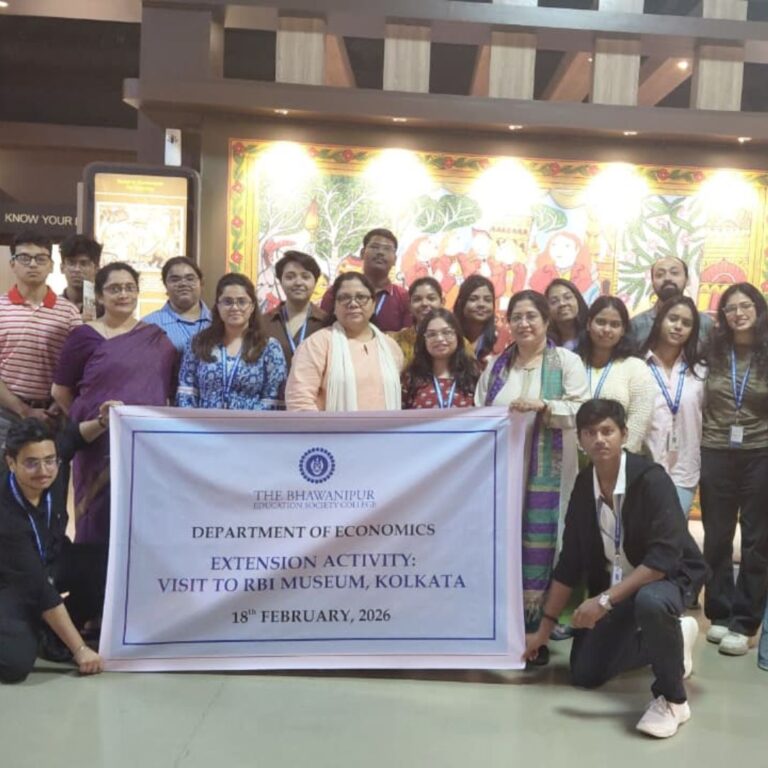
BESC’s B.Sc. (H) Economics course focuses on overall student growth. Through mentoring, tutorials, site visits, workshops, parent-teacher interactions, and expert seminars, students gain guidance, exposure, and practical skills beyond the classroom.

  • Mentoring Programs
  • Tutorials & Remedial Classes
  • Student Presentations
  • Industry Visits
  • Well-Stocked Library
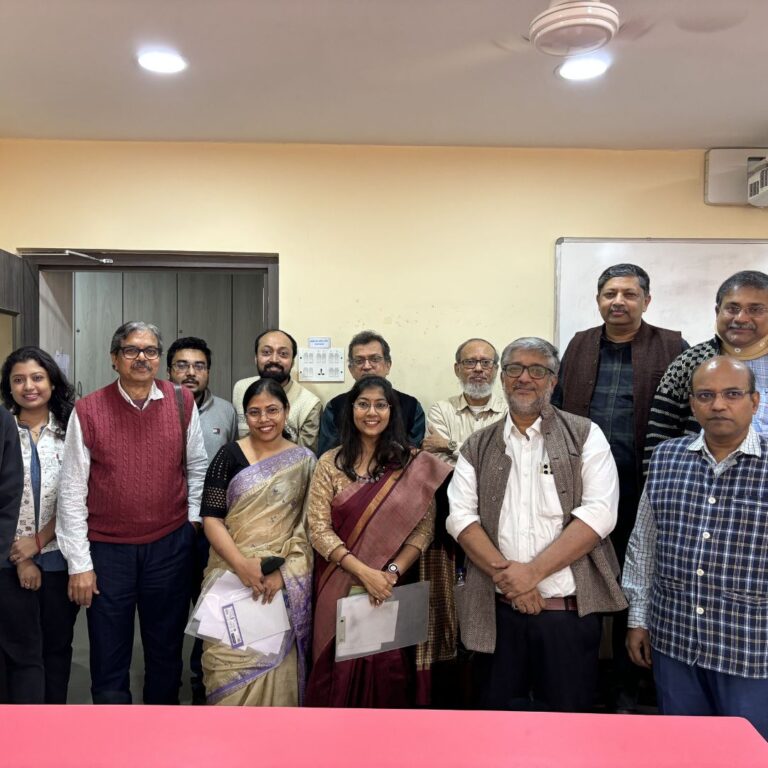
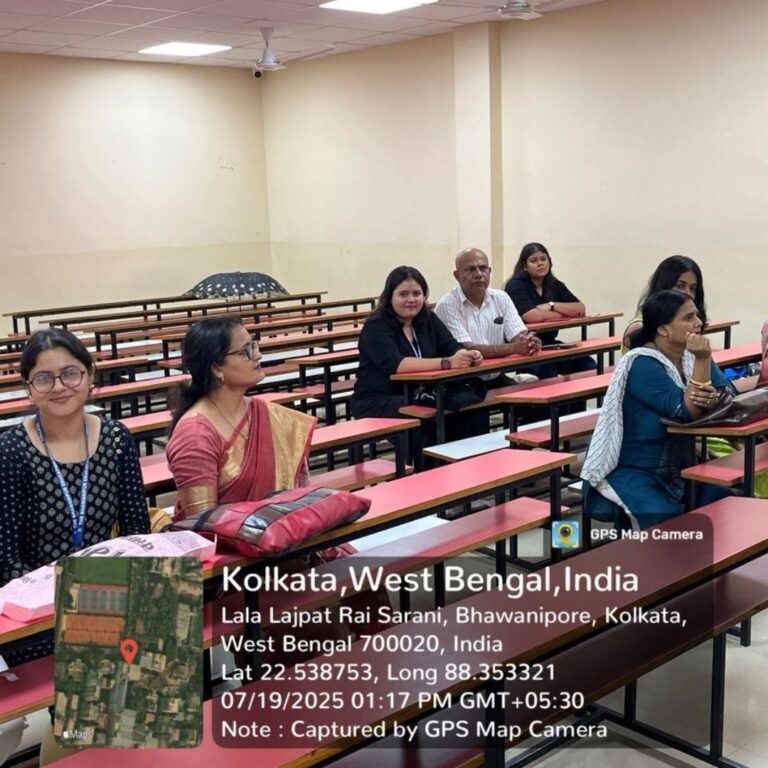
  • Expert Seminars

Innovative Teaching Methods

BESC’s B.Sc. (H) Economics course uses modern teaching approaches to engage students, foster critical thinking, and build a love for learning. Flipped classrooms, ICT-enabled lessons, workshops, seminars, and regular assignments make learning interactive and practical.

  • Flipped Classroom
  • ICT-Enabled Teaching
  • Student-Led Seminars
  • Regular Assignments
  • Hands-On Workshops
  • Lectures by academic luminaries

Course Information

A candidate taking up an Honours Course in a subject must have obtained, at the previous qualifying examination, a minimum of:

55% marks in Economics + PASS marks in Mathematics
OR,
45% marks in Economics + 50% marks in BO4 + PASS marks in Mathematics

Note:

If the candidate has not studied Economics in class XII, he / she needs to achieve the above-mentioned marks in Mathematics to apply for Economics (H).

Candidate passed in Business Mathematics is not eligible for Admission.

Please also read General Eligibility Criteria, Under Admissions.

100

Course Code Name of Course Semester Marks
CC-1 Introductory Microeconomics [Theory plus Tutorial] 1 100
CC-2 Mathematical Method for Ecomomics-I[Theory plus Tutorial] 1
GE-1 Introductory Microeconomics (Applicable for students opting for Economics as Generic Elective) 1 100
AECC-1 Communicating English/ Modern Indian Languages(MIL) 1 100
CC-3 Introductory Macroeconomics [Theory plus Tutorial] 2 100
CC-4 Mathematical Method for Ecomomics-II[Theory plus Tutorial] 2 100
GE-2 Introductory Macroeconomics (Applicable for students opting for Economics as Generic Elective) 2 100
AECC-2 Environmental Studies 2 100
CC-5 Intermediate Microeconomics-1 [Theory plus Tutorial] 3 100
CC-6 Intermediate Macroeconomics-1 [Theory plus Tutorial] 3 100
CC-7 Statictics for Economics[Theory plus Tutorial] 3 100
GE-3 Issues in Economic Development and India (Applicable for students opting for Economics as Generic Elective) 3 100
SE-1 Data Analysis[Theory]/Rural Development[Theory] 3 100
CC-8 Intermediate Microeconomics-II [Theory plus Tutorial] 4 100
CC-9 Intermediate Macroeconomics-II [Theory plus Tutorial] 4 100
CC-10 Introductory Econometrics[Theory plus Tutorial] 4 100
GE-4 Indian Economic Policies (Applicable for students opting for Economics as Generic Elective) 4 100
SE-2 Research Methodology [Theory]/Managerial Economics [Theory] 4 100
CC-11 International Economics [Theory plus Tutorial] 5 100
CC-12 India Economy[Theory plus Tutorial based Term Paper] 5 100
DSE-A(1) Applied Econometrics or Economic History of India (1857-1947) 5 100
DSE-B(1) Comparative Economic Development (1850-1950) or Financial Economics (FE) 5 100
CC-13 Public Economics[Theory plus Tutorial] 6 100
CC-14 Development Economics[Theory plus Tutorial] 6 100
DSE-A(2) Money and Financial Markets (MFM) (5+1) or Issues in Indian Economy (IIE) (4+2) 6 100
DSE-B(2) Environmental Economics (EE) or Issues in Development Economics (IDE) 6 100

Choose Any one

Mathematics (Compulsory)

Choose Any one

Computer Science / Statistics

IDC 1

Physics, Chemistry, Computer Science, Electronics, Statistics

IDC 2

Physics, Chemistry, Computer Science, Electronics, Statistics, Political Science, Sociology, History, English, Journalism & Mass Communication, Bengali, Hindi, Education, psychology, Geography, Film Studies

IDC 3

Physics, Chemistry, Computer Science, Electronics, Statistics, Political Science, Sociology, History, English, Journalism & Mass Communication, Bengali, Hindi, Education, psychology, Geography, Film Studies

Career Path

Economic Consultant & Policy Advisor

Analyzing market trends and fiscal indicators to advise government bodies (such as the Ministry of Finance) or private financial institutions on high-level decision-making.

Financial & Investment Analyst

Evaluating the viability of assets for investment banks and insurance firms to optimize portfolio returns.

Data Scientist & Business Analyst

Leveraging a rigorous foundation in statistics and econometrics to decode massive datasets for global tech and e-commerce leaders.

Public Policy Consultant

Partnering with international organizations (World Bank, IMF) and think tanks (NITI Aayog) to design programs tackling global socioeconomic challenges.

Actuarial Science & Risk Analysis

Using mathematical models to assess financial risks, ensuring the long-term stability of global pension and insurance funds.

Management Consulting

Applying economic logic to solve complex organizational problems for top-tier firms like McKinsey, BCG, or Bain.

ESG & Environmental Economist

Analyzing the economic impact of climate change to guide corporate transitions toward "Green Growth" and sustainable development.

International Trade Specialist

Advising corporations on global trade laws, tariffs, and export-import strategies in an interconnected market.

Market Research Analyst

Decoding consumer behavior and market dynamics to help brands optimize pricing and strategic placement.

Indian Economic Service (IES) & Civil Services

Pursuing elite administrative careers through the UPSC; an Economics background is a critical asset for the IES and General Studies papers.

FAQs*

Pursuing a BSc Hon. Economics degree offers numerous benefits. It provides a strong foundation in economic theory, quantitative analysis, and critical thinking skills. It equips you with a deep understanding of how economies function, making you valuable in various sectors such as finance, consulting, research, policy-making, and more.

The scope of a BSc Hon. Economics degree is vast. It opens doors to diverse career opportunities in both the public and private sectors. Graduates can work as economists, financial analysts, data analysts, policy analysts, market researchers, consultants, and more. They can also pursue higher education in economics or related fields.

With a BSc Hon. Economics degree, you can explore various career paths. The demand for economists and economic analysts is high in today’s data-driven and globalized world. (i) Academics (ii) Civil Services (iii) Field of Finance (iv) Management (v) Self-employment (vi) Economic and Financial Consultancy (vii) Politics

BSc Hon. Economics programs typically offer a range of specialized courses. These may include microeconomics, macroeconomics, econometrics, mathematical economics, international economics, development economics, financial economics, public economics, and industrial organization. The specific course offerings may vary among universities.

Graduates with a BSc Hon. Economics degree can find employment in various corporate roles. These may include financial analysts, business analysts, investment analysts, market researchers, data analysts, strategic planners, economic consultants, and risk analysts. Corporations value the analytical and problem-solving skills that economics graduates bring to the table. The student can fit into any niche of the management cadre in a corporate framework with proper training and willingness to learn.

BSc Hon. Economics graduates also have the option to appear for competitive exams in their respective countries. These exams can lead to government job opportunities in fields such as civil services, economic services, banking, and public sector undertakings. Examples include UPSC Civil Services Exam, Actuarial Services, RBI Grade B Exam, SSC CGL Exam, and state-level administrative exams.

A BSc Hon. Economics degree provides a solid foundation that can facilitate career switches later on. Graduates can explore fields such as finance, data science, policy analysis, international relations, marketing, research, and academia. With the right skills and additional qualifications, transitioning to a new career path becomes feasible.

* Frequently Asked Questions

Accomplishments

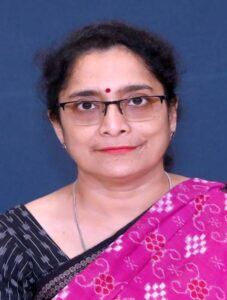
Dr. Ivy Das Gupta

Economics, Assistant Professor

Published international research on climate impacts across five countries (2024)

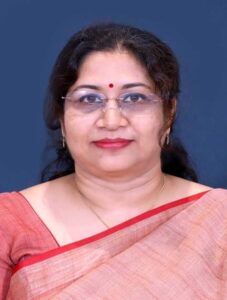
Dr. Samyo Basu

B.A./ B.Sc., M.A./ M.Sc., M.Phil., Ph.D.

Published in Artha Vijnana and presented research on neo-liberal governance in India (2024–2025).

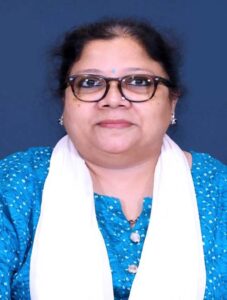
Ms. Anuradha Dutta

M. Sc, B.Ed

Co-authored a book chapter on sustainable agriculture integrating indigenous knowledge and modern science (2025).

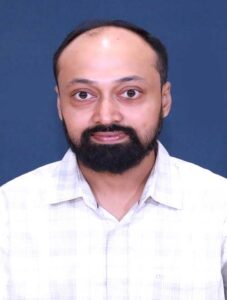
Dr. Purba Roy Choudhury

Ph. D., M. Phil, M. A.

Served as Discussant at an international conference on trade and finance at IIFT Kolkata (2024).

Dr. Anupa Ghosh

Ph. D., M.A.

Delivered invited lecture on research methodology at Loreto College, Kolkata (2025).

Suhana Singh

B.Sc. Economics, Semester VI

National and state-level winner across debates and competitions, with multiple first-place finishes and active participation in prestigious academic forums.

Arka Das

B.Sc. Economics (Batch 2021–2024)

Pursuing Master’s at IIT Madras and Research Intern at the World Trade Organization (Agriculture & Commodities Division).

Harshita Joshi

B.Sc. Economics (Batch 2020–2023)

Associate at PwC, recognized for strong academic foundation and professional readiness.

Learning in Action

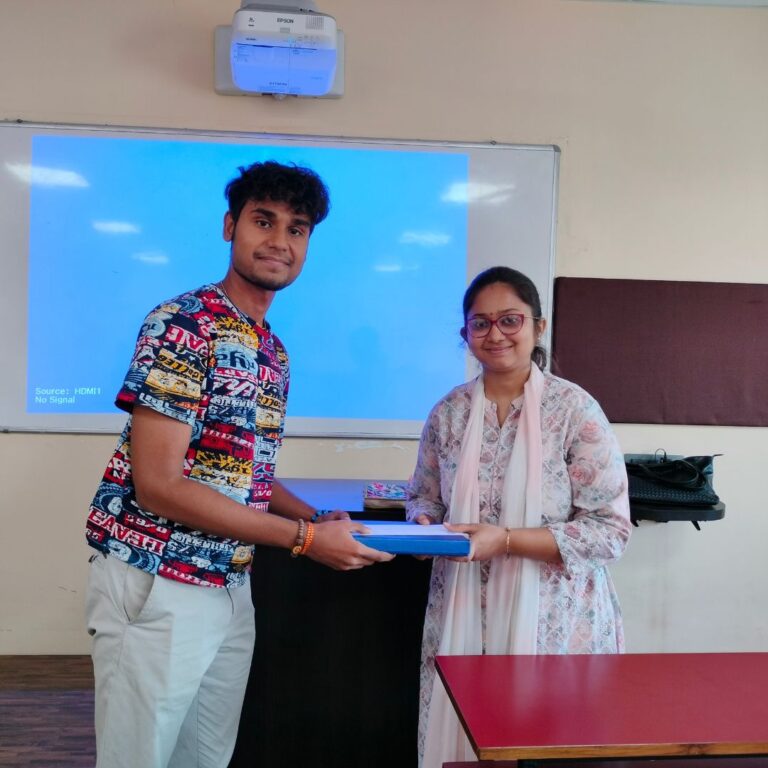
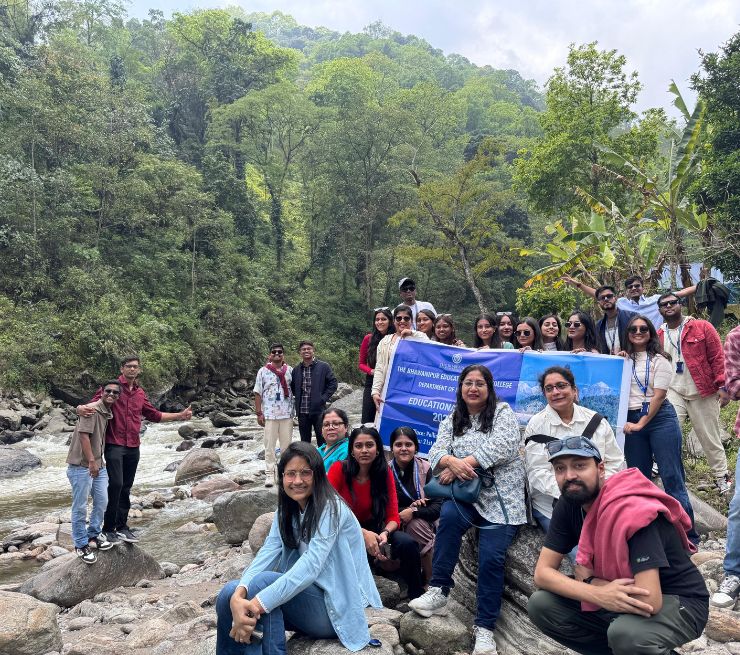
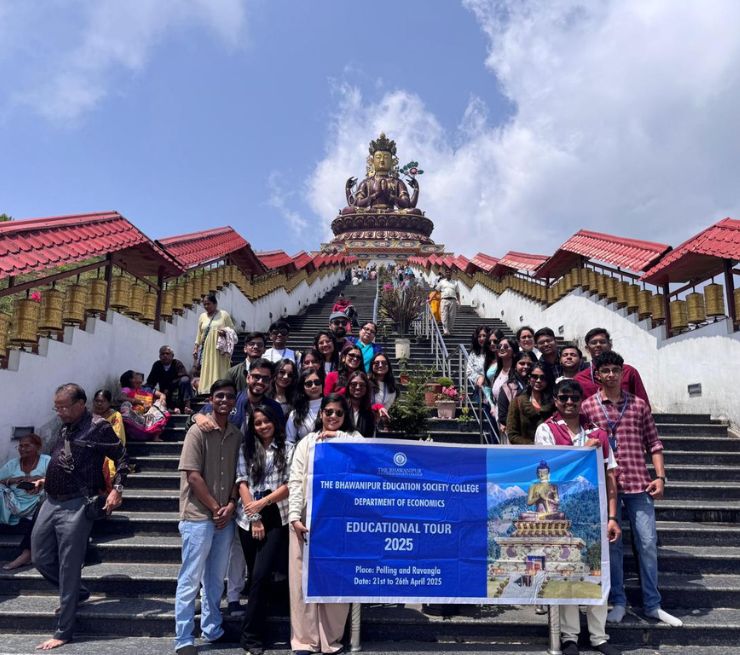
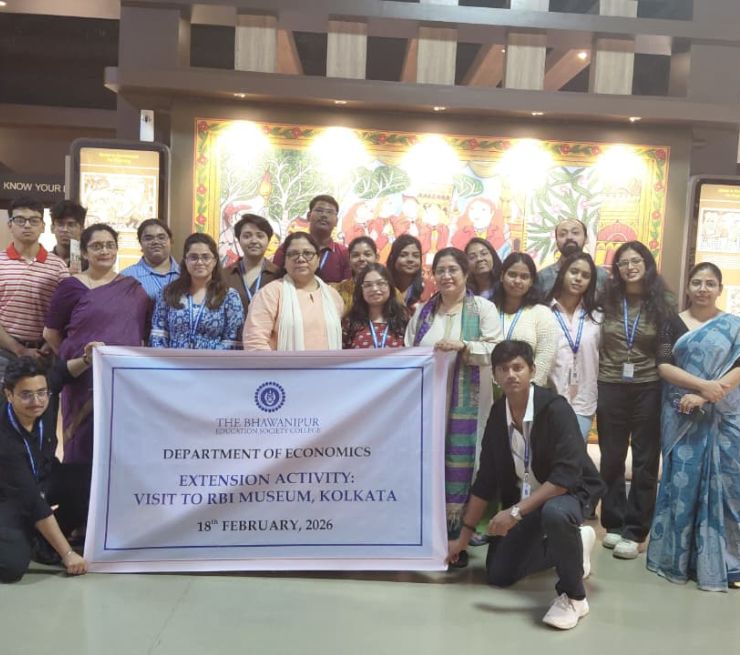
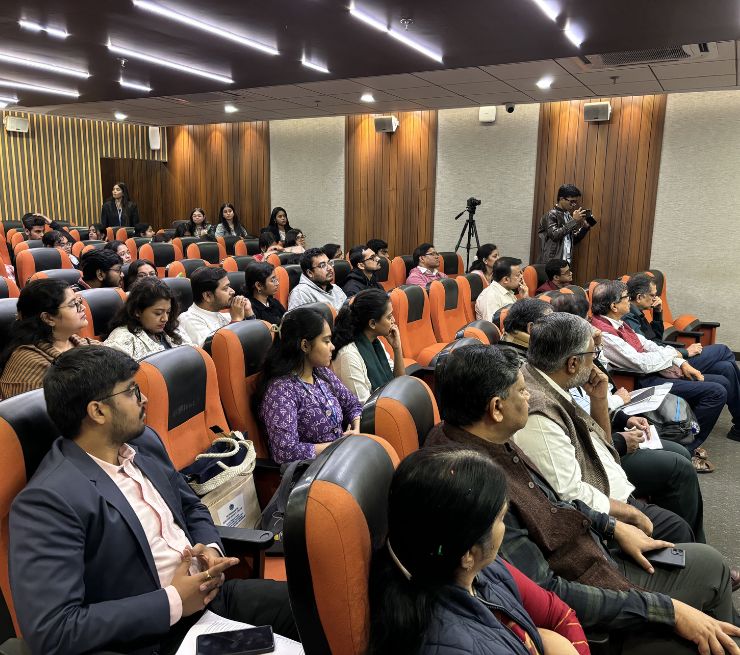
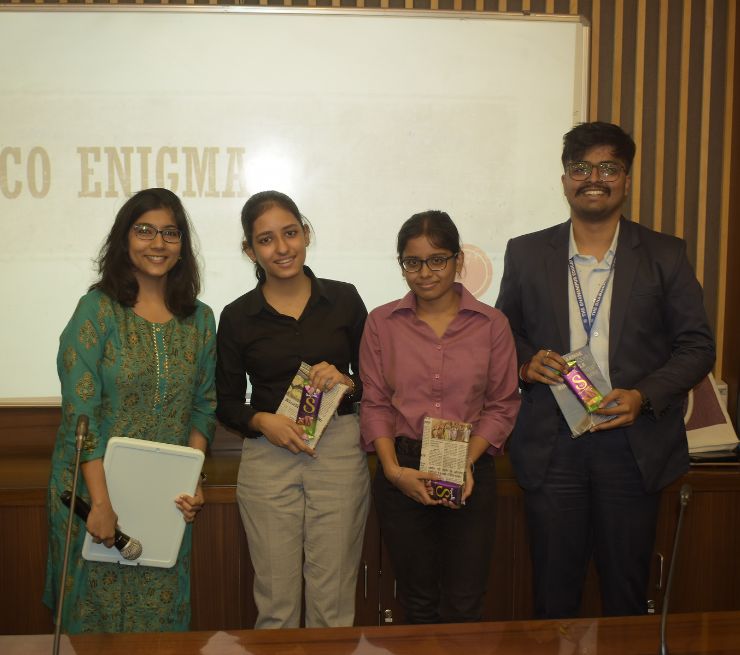
BESC’s B.Sc. (H) Economics course is designed to strike the perfect balance between academic learning and real-world exposure. Alongside a strong foundation in the classroom, students benefit from industry mentorship, site visits, hands-on workshops, expert seminars, and insightful guest lectures. These experiences enrich their understanding, bridge theory with practice, and prepare them to confidently navigate professional environments.

Faculty

Student Speak

A true launchpad for curiosity where learning goes beyond textbooks. The supportive professors and practical exposure have shaped my clarity and professional ambition.
Suhana Singh
Suhana Singh

Batch: 2023-27

The three-year journey in the Economics Department has been deeply enriching. The faculty members are highly knowledgeable and supportive, fostering both academic excellence and personal growth.
Preksha Bagri
Preksha Bagri

Batch: 2022-25

The Economics faculty provided both the academic bedrock and the platform I needed to excel. They didn't just teach; they invested in my potential as I navigated the complexities of Economic theory.
Priyanka Bardia
Priyanka Bardia

Batch: 2022-25

The department provides incredible growth opportunities through research exposure and seminars, led by a faculty that encourages curiosity and confidence at every step.
Aarushi Somani
Aarushi Somani

Batch: 2024-28

BESC offers a holistic, immersive learning experience, encouraging us to explore complex concepts deeply and apply them confidently in real-world situations.
Mohammed Naail Safi
Mohammed Naail Safi

Batch: 2025-29

Admission 26–27 Enquiry