Course Overview

B.Sc. Electronics is a specialised course for students who wish to learn the fundamentals of electronics. This programme, which covers topics like Engineering Materials, Digital Electronics, Analog Electronics, Data Structure, Programming Languages, Quantum Mechanics, Mathematics, Statistics, Network Analysis, Fundamentals of Electronics and Electromagnetics, prepares students for challenges in the electronics and communication industry by equipping them with good analytical and communication skills.

DURATION

4 Years | 8 semesters

- 4 Years: UG Honours or,
- UG Honours with Research
- 3 Years: Bachelor’s Honours (exit option)

TIMING

10:15 am to 4:30 pm

Day Session, Co-Ed

Student Development Initiatives

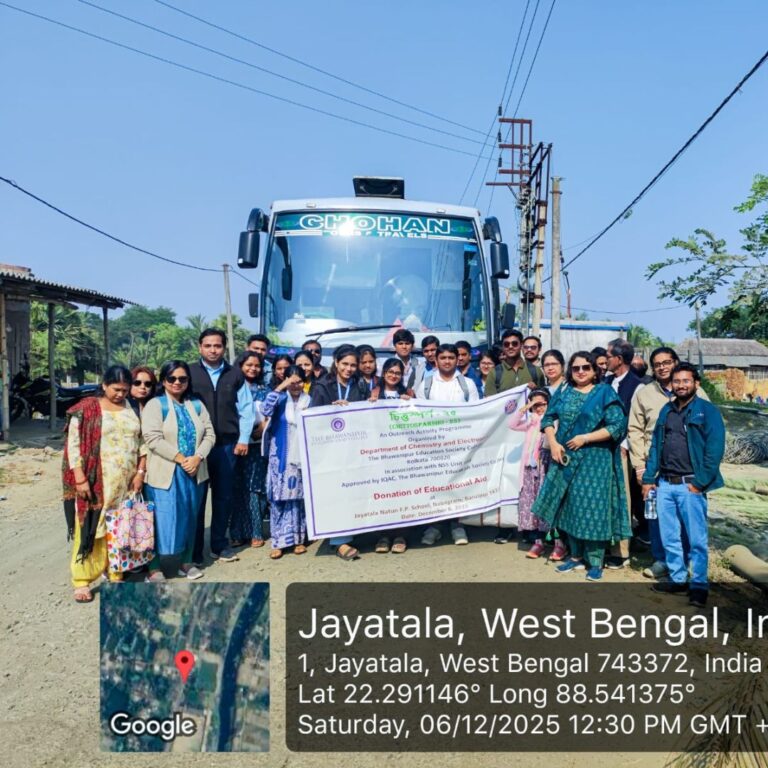
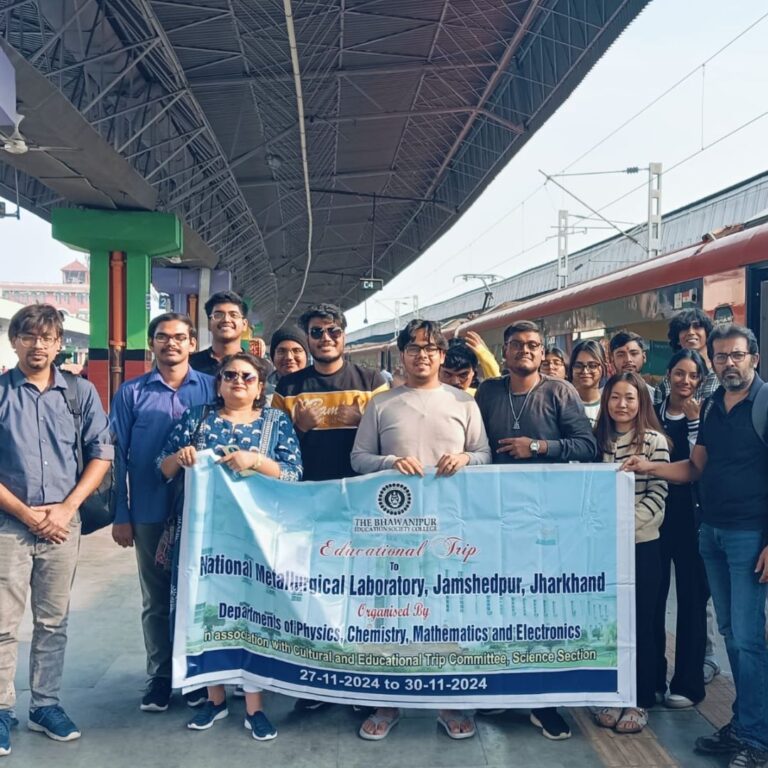
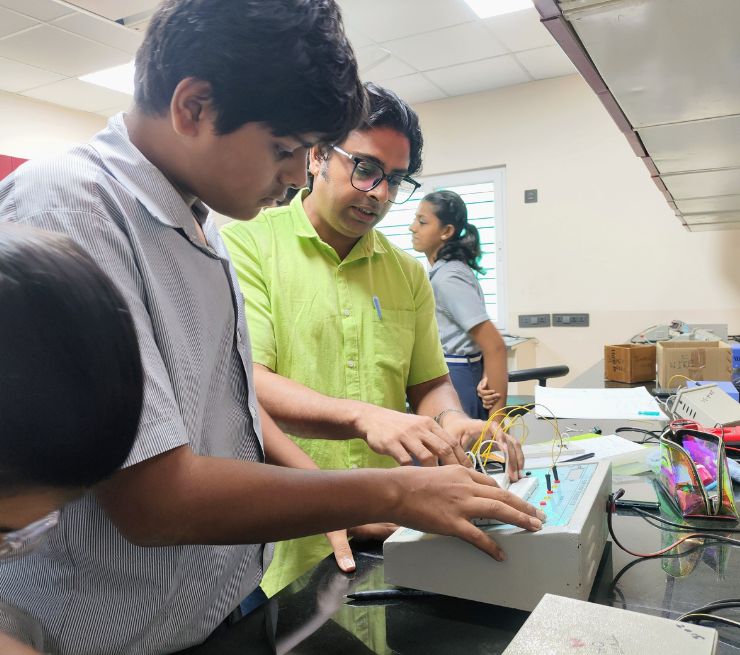
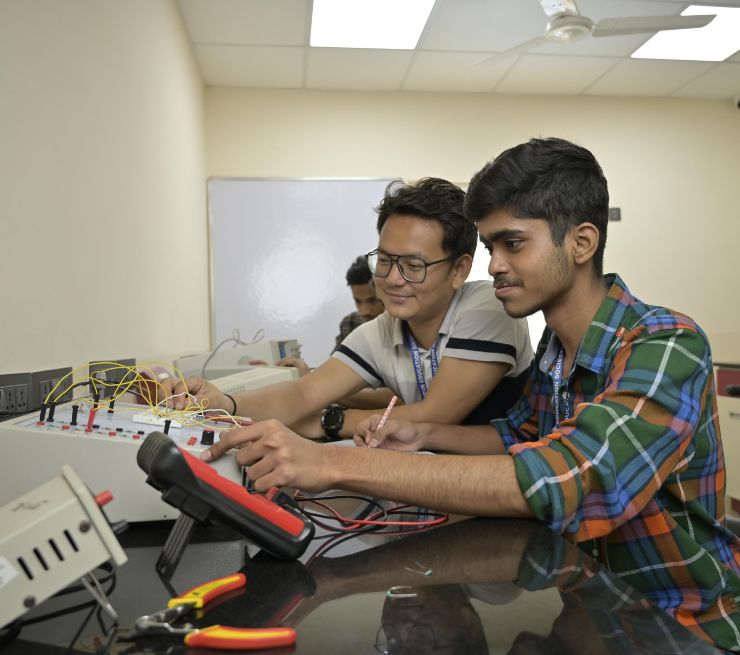
BESC’s B.Sc. (H) Electronics course focuses on overall student growth. Through mentoring, tutorials, site visits, workshops, parent-teacher interactions, and expert seminars, students gain guidance, exposure, and practical skills beyond the classroom.

  • Mentoring Programs
  • Tutorials & Remedial Classes
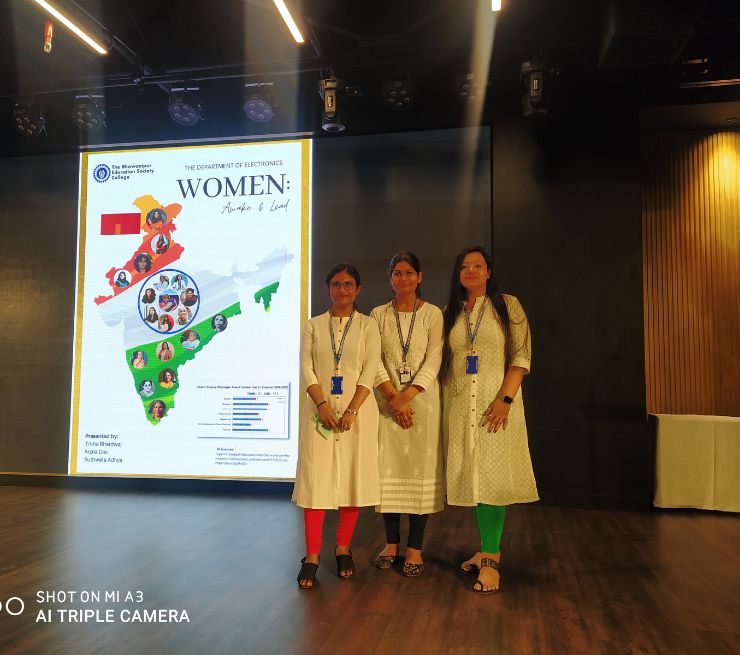
  • Student Presentations
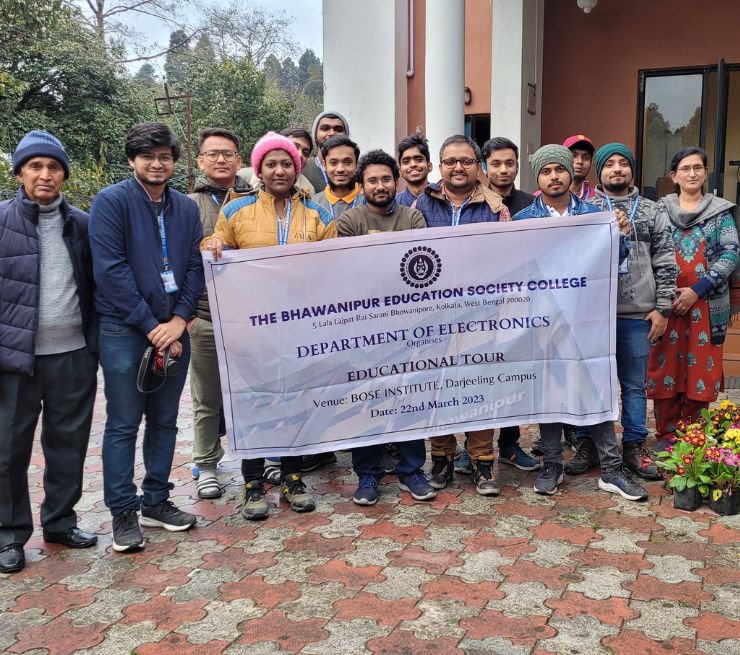
  • Industry Visits
  • Well-Stocked Library
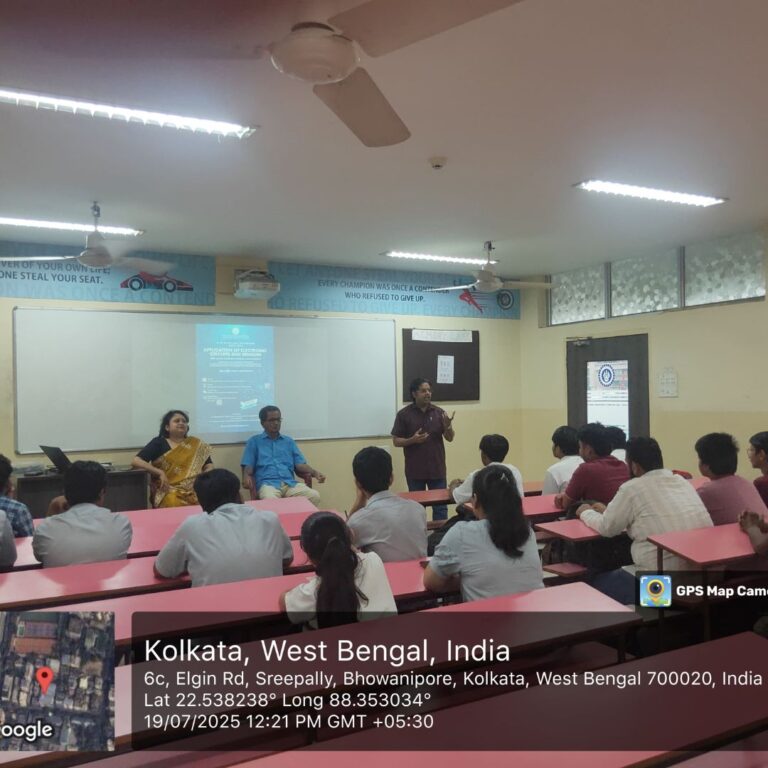
  • Expert Seminars

Innovative Teaching Methods

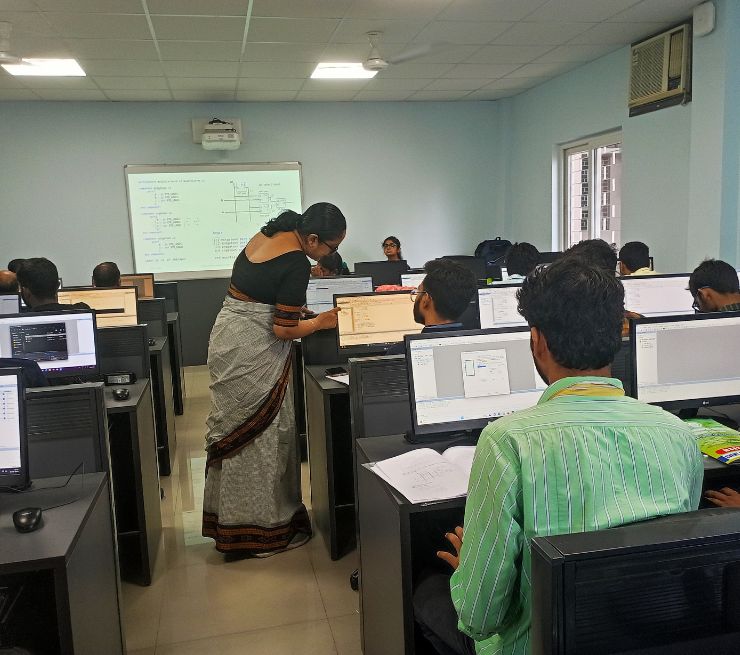
BESC’s B.Sc. (H) Electronics course uses modern teaching approaches to engage students, foster critical thinking, and build a love for learning. Flipped classrooms, ICT-enabled lessons, workshops, seminars, and regular assignments make learning interactive and practical.

  • Flipped Classroom
  • ICT-Enabled Teaching
  • Student-Led Seminars
  • Regular Assignments
  • Hands-On Workshops
  • Lectures by academic luminaries

Course Information

A candidate taking up an Honours Course in a subject must have obtained, at the previous qualifying examination, a minimum of:

55% marks in Electronics + PASS marks in Mathematics
OR,
45% marks in Electronics + 50% marks in BO4 + PASS marks in Mathematics

Note:

If the candidate has not studied Electronics in class XII, he / she needs to achieve the above-mentioned marks in Physics to apply for Electronics (H).

Candidate passed in Business Mathematics is not eligible for Admission.

Please also read General Eligibility Criteria, Under Admissions.

Course Code Course Name Type Marks
CC-1 Basic Circuit Theory and Network Analysis 1 100
CC-2 Mathematics Foundation for Electronics 1 100
GE-1 Network Analysis and Analog Electronics (Applicable for students opting for Electronics as Generic Elective) 1 100
AECC-1 Communicative English/MIL 1 100
CC-3 Applied Physics 2 100
CC-4 C Programming and Data Structure 2 100
GE-2 Linear and Digital Integrated Circuits (Applicable for students opting for Electronics as Generic Elective) 2 100
AECC-2 Environmental Studies 2 100
CC-5 Semiconductor Devices 3 100
CC-6 Electronic Circuits 3 100
CC-7 Electromagnetics 3 100
SEC-1-A-1 or SEC-1-A-2 Design and Fabrication of Printed Circuit Boards or Circuit Modeling using PSPICE 3 100
GE-3 Communication Electronics (Applicable for students opting for Electronics as Generic Elective) 3 100
CC-8 Operational Amplifiers and Applications 4 100
CC-9 Digital Electronics and VHDL 4 100
CC-10 Signals and Systems 4 100
SEC-2-B-1 or SEC-2-B-2 Internet and Java Programming or programming with Matlab/Scilab 4 100
GE-4 Microprocessors and Microcontrollers (Applicable for students opting for Electronics as Generic Elective) 4 100
CC-11 Electronic Instrumentation 5 100
CC-12 Microprocessors and Microcontrollers 5 100
DSE-1-A-1 or DSE-1-A-2 Numerical Techniques or Control Systems 5 100
DSE-2-B-1 or DSE-2-B-2 Semiconductor Fabrication and Characterization or Power Electronics 5 100
CC-13 Communication Electronics 6 100
CC-14 Photonics 6 100
DSE-3-A-1 or DSE-3-A-2 Basic VLSI Design or Digital Signal Processing 6 100
DSE-4-B-1 or DSE-4-B-2 Biomedical Instrumentation or Transmission Lines + Antenna and Microwave Devices 6 100

Choose Any one

Mathematics (Compulsory)

Choose Any one

Physics / Computer Science / Economics

IDC 1

Physics, Chemistry, Computer Science, Economics, Statistics

IDC 2

Physics, Chemistry, Computer Science, Economics, Statistics, Political Science, Sociology, History, English, Journalism & Mass Communication, Bengali, Hindi, Education, psychology, Geography, Film Studies

IDC 3

Physics, Chemistry, Computer Science, Economics, Statistics, Political Science, Sociology, History, English, Journalism & Mass Communication, Bengali, Hindi, Education, psychology, Geography, Film Studies

AECS
Add-On Course

AECS

Application of electronic circuits and sensors

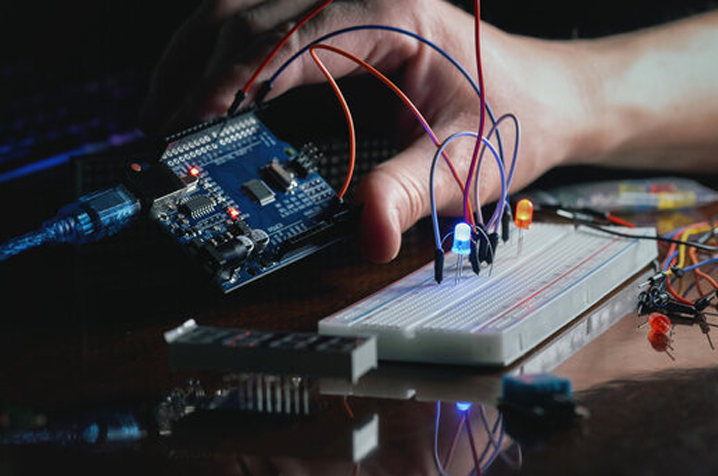
The AECS program bridges theoretical physics with industrial application, focusing on Arduino-based innovation and real-world sensor integration.Through practical experiments with circuits, Arduino, and real-world sensor applications, students develop problem-solving skills and gain insight into how electronic systems are designed, built, and used in modern industry.

Read More

Career Path

Embedded Systems Engineer

Designing the "brains" of modern gadgets, from smartwatches to industrial robots, by programming microcontrollers and integrating hardware with software.

Semiconductor & VLSI Design

Entering the booming chip-design industry to work on Very Large Scale Integration (VLSI), helping create the next generation of processors in line with the India Semiconductor Mission.

IoT (Internet of Things) Solutions Architect

Developing smart systems for homes, cities, and factories where devices communicate wirelessly to automate tasks.

Robotics & Automation Specialist

Working in Industry 4.0 to design and maintain automated production lines, drones, and robotic arms.

Telecom & 5G/6G Infrastructure

Managing high-speed data networks and satellite communication systems as a Network Engineer for global providers.

EV (Electric Vehicle) Tech & Power Electronics

Contributing to the green energy transition by designing efficient battery management systems (BMS) and motor controllers.

Scientific Assistant (Government Research)

Securing prestigious technical roles in premier national organizations like ISRO, DRDO, and BARC.

Quality Control & Testing Engineer

Ensuring that electronic components and medical devices meet international safety and performance standards.

PCB (Printed Circuit Board) Designer

Creating the intricate physical layouts of electronic circuits that power everything from household appliances to aerospace navigation systems.

Higher Studies & Research (M.Sc./M.Tech/MBA)

Progressing into advanced research in Nanotechnology or Photonics via an M.Sc./M.Tech, or pivoting to Tech-Management through an MBA.

FAQs*

* Frequently Asked Questions

Learning in Action

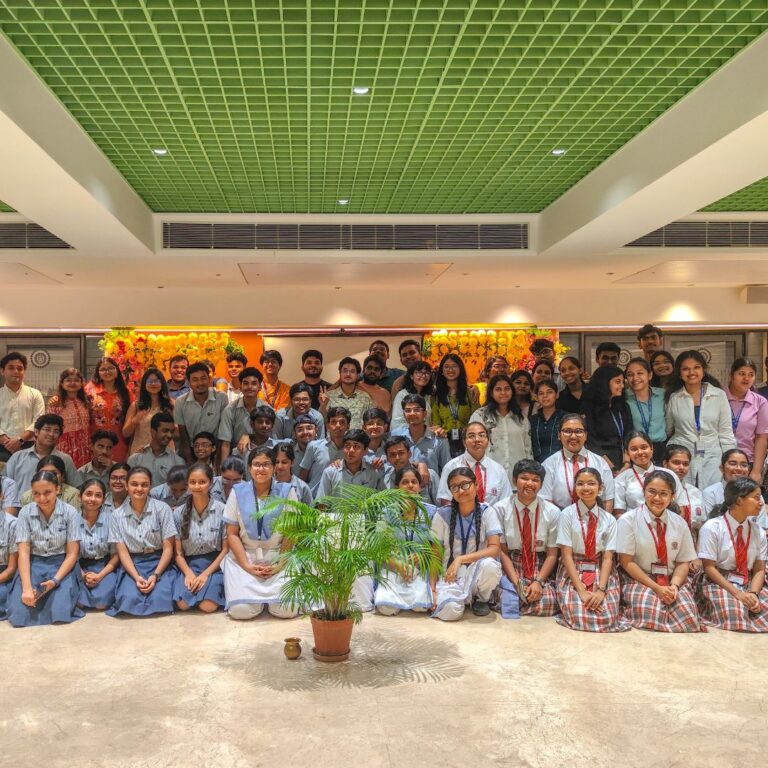
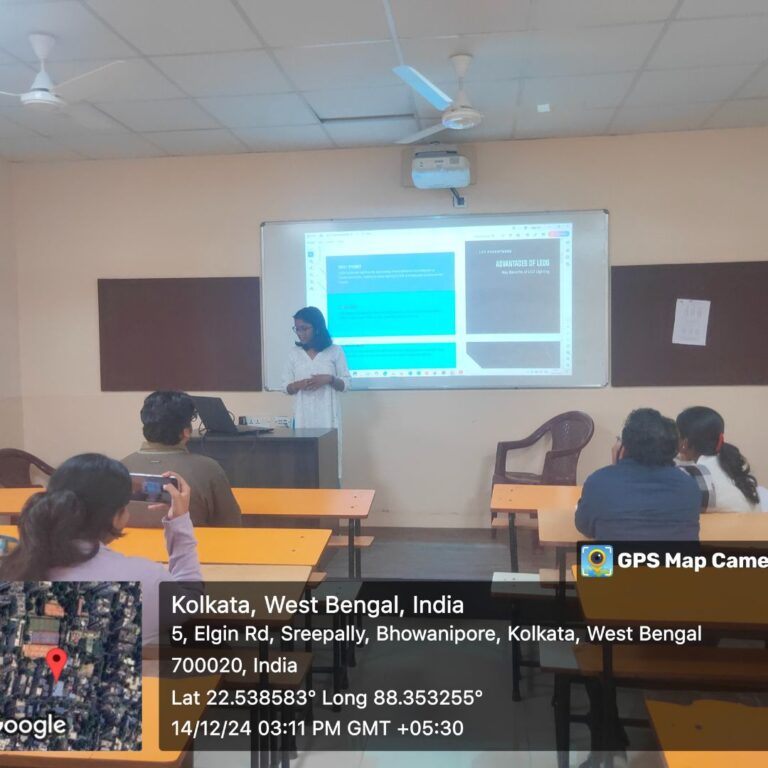
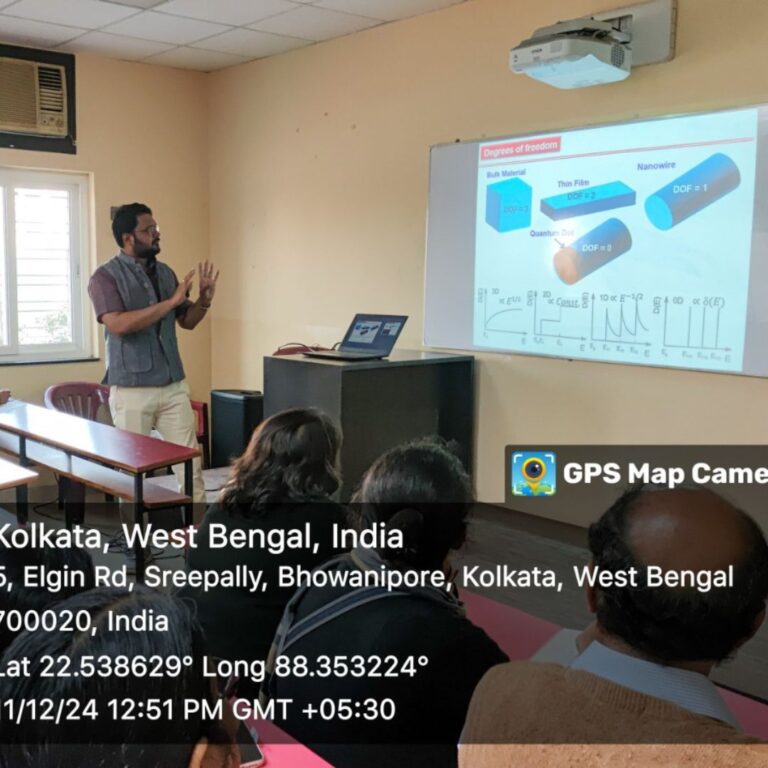
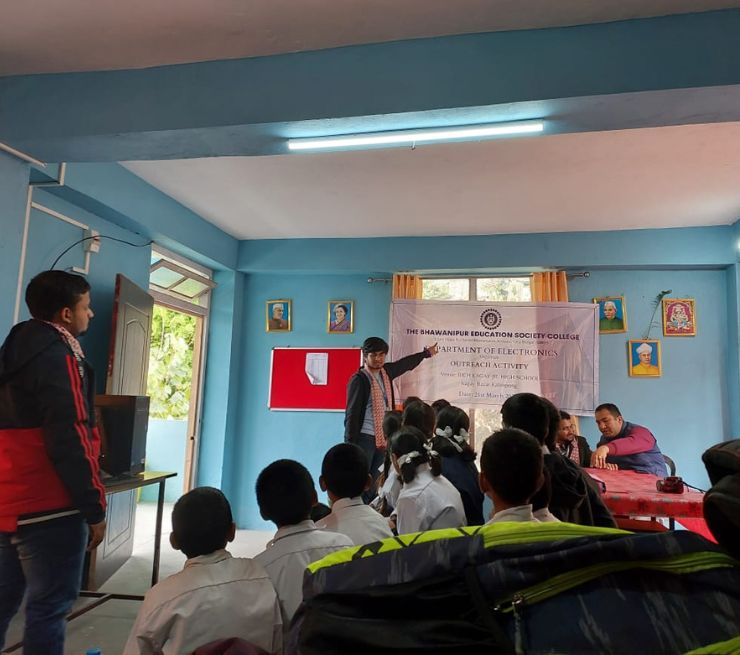
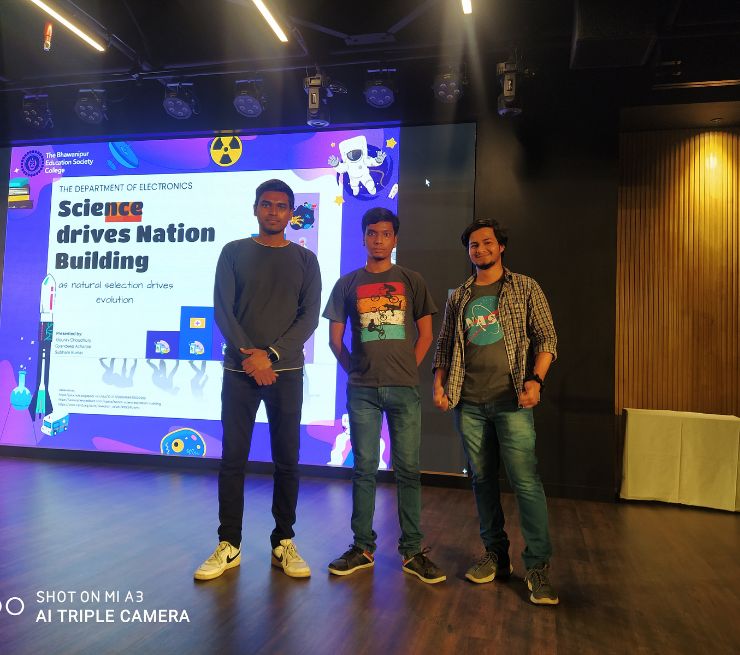
BESC’s B.Sc. (H) Electronics course is designed to strike the perfect balance between academic learning and real-world exposure. Alongside a strong foundation in the classroom, students benefit from industry mentorship, site visits, hands-on workshops, expert seminars, and insightful guest lectures. These experiences enrich their understanding, bridge theory with practice, and prepare them to confidently navigate professional environments.

Faculty

Student Speak

I am grateful to the Electronics Department for its rigorous problem-solving culture and hands-on labs. The faculty mentorship and industry-focused training built the curiosity and teamwork necessary to drive impactful programs in the workplace.
Suyash Chowrasia

Batch: 2018–21

o meet the demands of India’s evolving silicon landscape, the foundation must begin with this specialized coursework. The modern lab facilities at Bhawanipur College helped me visualize real-world implementation in communication devices and IoT, giving me the confidence to approach practical solutions during my professional internship.
Rudra Pratap Naskar
Rudra Pratap Naskar

Batch: 2018–21

Admission 26–27 Enquiry